How to Plan Lighting for a New Home or Home Remodel: A Room-by-Room Guide
Lighting plays an important role in making a home comfortable, functional, safe, and visually appealing. The right lighting can make a small room feel more spacious, highlight interior design elements, improve productivity, and create a warm atmosphere.
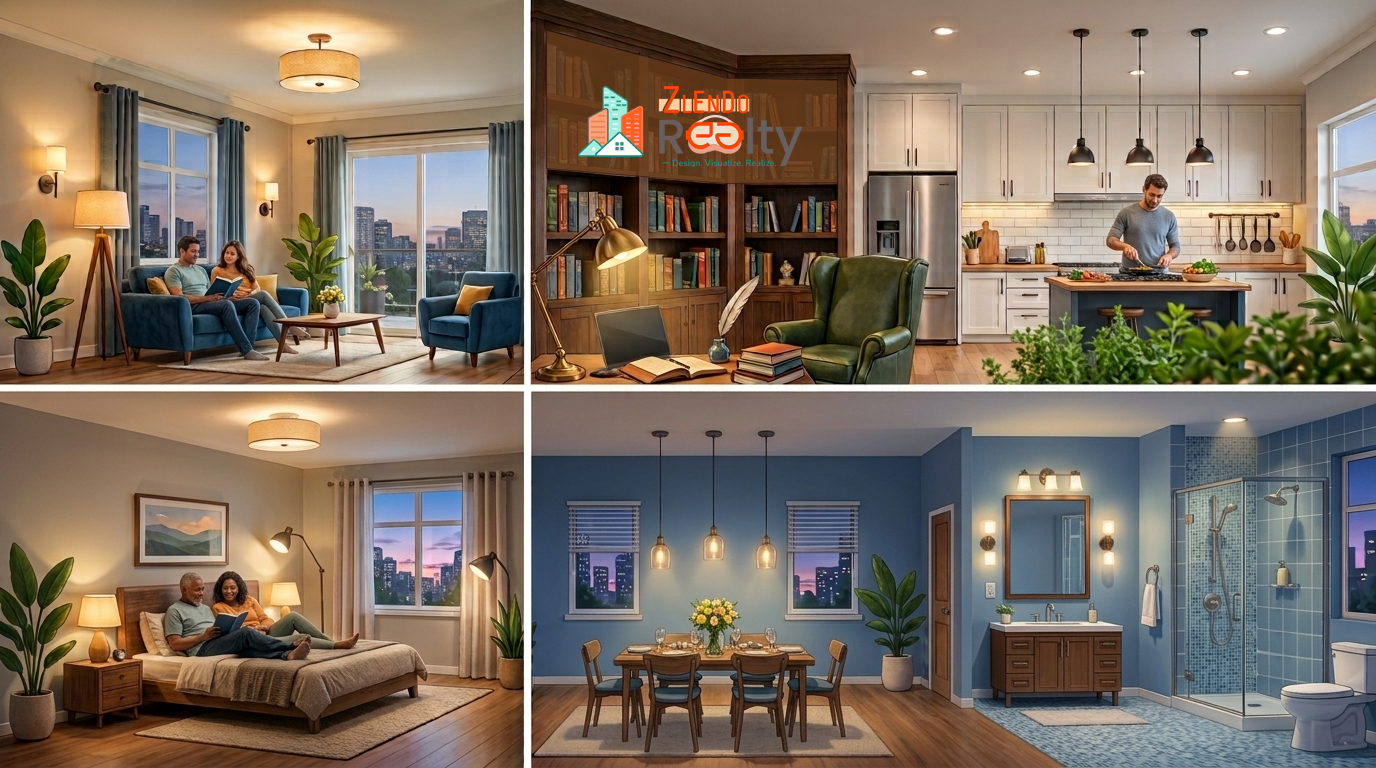
However, you should not use the same type of light throughout your home. Each space has different requirements based on its purpose, size, furniture, activities, and natural light.
From the living room and kitchen to bedrooms, bathrooms, balconies, staircases, study rooms, parking areas, entrances, and terraces, choosing the right combination of ambient, task, and accent lighting can significantly improve your home.
In this guide, we’ll explain how to pick the right lights for different areas of your home.
1. Understand the Three Main Types of Home Lighting
Before choosing lights, it helps to understand the three basic lighting layers.
Ambient Lighting
Ambient lighting provides general illumination throughout a room. It is usually created using:
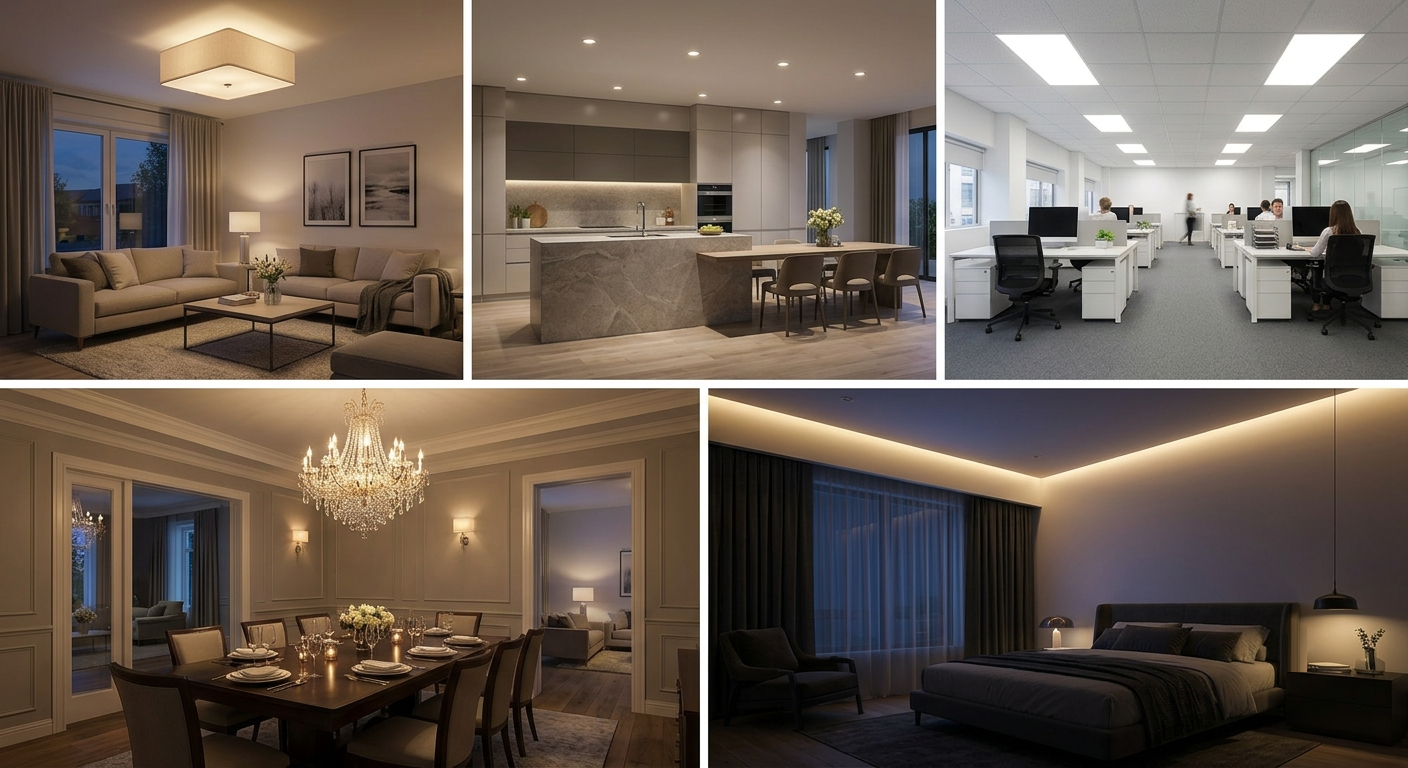
- Ceiling lights
- Recessed downlights
- LED panels
- Chandeliers
- Cove lighting
Task Lighting
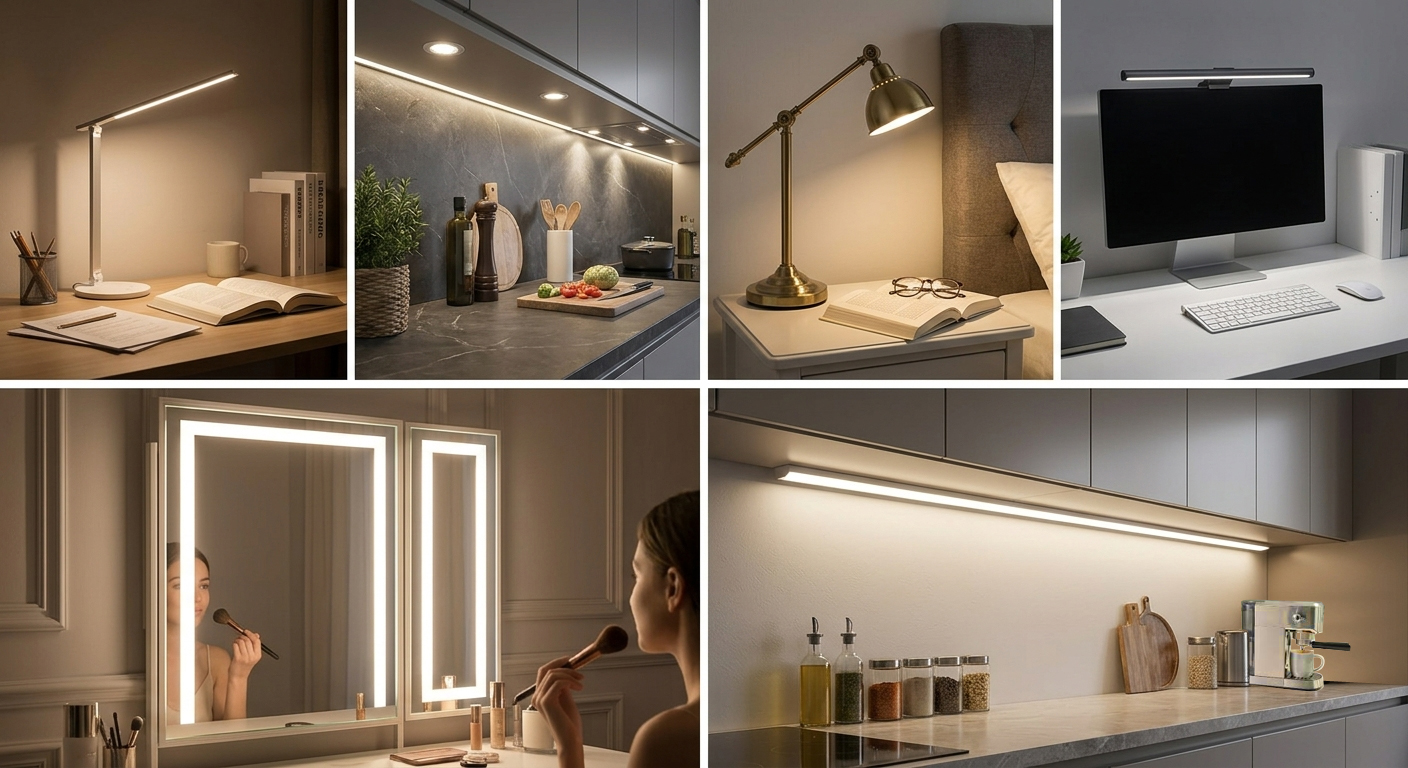
Task lighting provides focused illumination for specific activities.
Examples include:
- Kitchen counter lights
- Study lamps
- Bedside lights
- Mirror lights
- Under-cabinet lighting
Accent Lighting
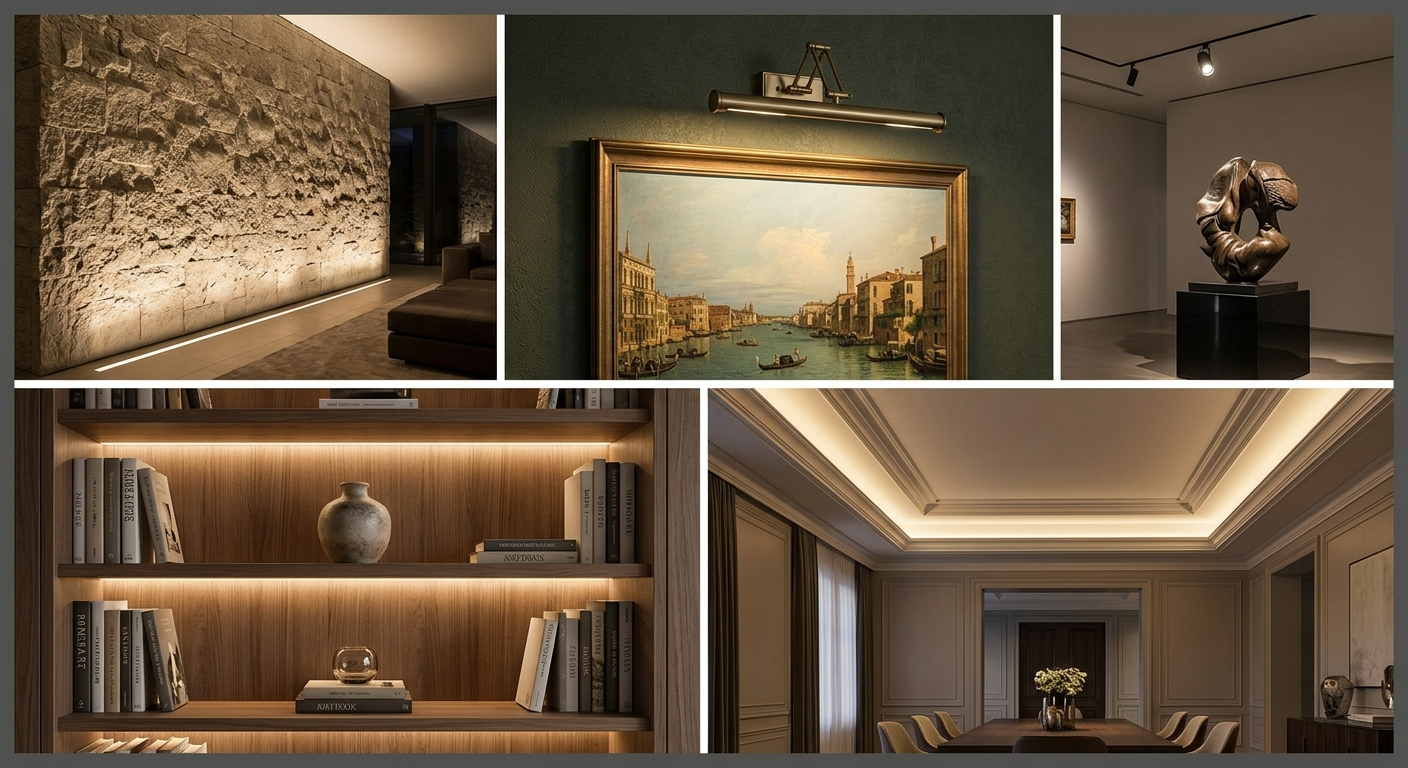
Accent lighting is mainly used to highlight architectural or decorative features.
Examples include:
- Wall washers
- Spotlights
- Cove lights
- Picture lights
- Decorative LED strips
A well-designed home usually combines all three layers rather than depending on one light source.
2. How to Choose Lights for the Hall or Living Room
The hall is one of the most important areas of a home because it is used for relaxing, entertaining guests, watching television, and spending time with family.
Recommended Lighting
Consider combining:
- Recessed ceiling lights for general illumination
- Cove lighting for a soft glow
- Pendant lights or chandeliers for decoration
- Floor or table lamps for additional lighting
- Spotlights to highlight artwork or wall features
Light Color
A warm white or neutral white light can create a comfortable living-room atmosphere.
Lighting Tip
Avoid placing extremely bright lights directly above the television because reflections can make the screen uncomfortable to watch.
3. How to Choose Lights for the Kitchen
The kitchen requires functional lighting because cooking, cutting, cleaning, and food preparation require good visibility.
Recommended Lighting
Use a combination of:
- Ceiling lights
- Under-cabinet LED lights
- Pendant lights above an island or breakfast counter
- Task lights over work areas
- Cabinet interior lighting
Light Color
A neutral white light is often suitable for kitchen work because it provides clear visibility.
Lighting Tip
Make sure countertops and cooking areas do not fall into shadows caused by overhead cabinets or the person working at the counter.
4. How to Choose Lights for the Bedroom
Bedroom lighting should be relaxing while still providing enough illumination for activities such as reading and getting dressed.
Recommended Lighting
Consider:
- Ceiling lights
- Bedside lamps
- Wall-mounted reading lights
- Cove lighting
- Wardrobe lights
- Pendant lights
Light Color
Warm white lighting is generally suitable for creating a relaxing environment.
Lighting Tip
Install separate controls for the main ceiling light and bedside lights so you can adjust the lighting according to your needs.
5. How to Choose Lights for the Bathroom
Bathrooms need bright, practical lighting, especially around mirrors and grooming areas.
Recommended Lighting
Use:
- Ceiling lights
- Mirror lights
- Vanity lights
- Recessed downlights
- Waterproof-rated fixtures where required
Light Color
Neutral white lighting can work well around mirrors because it provides clearer visibility.
Safety Tip
Bathroom lights should be appropriately rated for moisture and installed according to local electrical safety requirements. Avoid installing unsuitable fixtures in areas exposed directly to water.
6. How to Choose Lights for the Staircase
Staircase lighting is primarily about safety, but it can also become an attractive architectural feature.
Recommended Lighting
Consider:
- Wall lights
- Step lights
- LED strip lighting
- Railing lights
- Ceiling spotlights
Lighting Tip
Avoid strong glare directly into people’s eyes while they are walking up or down the stairs.
Step lights can help clearly define each step without making the staircase excessively bright.
7. How to Choose Lights for the Balcony
Balcony lighting should provide enough illumination while maintaining a relaxing outdoor atmosphere.
Recommended Lighting
You can use:
- Wall-mounted outdoor lights
- Pendant lights
- Decorative string lights
- LED strips
- Floor or planter lights
Lighting Tip
Choose fixtures specifically designed for outdoor use and suitable for the level of exposure to rain and moisture.
For a relaxing balcony, use softer lighting instead of very bright floodlights.
8. How to Choose Lights for the Study Room or Home Office
A study room needs lighting that supports reading, writing, computer work, and focused activities.
Recommended Lighting
Use:
- Ceiling lighting
- Desk lamps
- Adjustable task lights
- Bookshelf lights
- Under-shelf LED lighting
Light Color
Neutral white lighting is often suitable for focused work.
Lighting Tip
Position your desk lamp carefully to reduce shadows and screen glare. If you are right-handed, placing the task light on the left side can help reduce shadows while writing, and vice versa.
9. How to Choose Lights for Parking and Garage Areas
Parking areas require practical lighting for visibility and safety.
Recommended Lighting
Consider:
- LED battens
- Surface-mounted lights
- Ceiling lights
- Motion-sensor lights
- Outdoor wall lights
- Floodlights for larger areas
Lighting Tip
Motion sensors can be useful for automatically turning lights on when someone enters the parking area.
Make sure outdoor fixtures are appropriately weather-resistant.
10. How to Choose Lights for the Main Home Entrance
The entrance creates the first impression of your home and also needs sufficient lighting for safety.
Recommended Lighting
Consider:
- Wall sconces
- Pendant lights
- Ceiling lights
- Downlights
- Doorway lights
- Pathway lights
You can also use accent lighting to highlight the main door, house number, plants, or architectural features.
Lighting Tip
Make sure the door lock, doorbell, steps, and pathway are clearly visible at night.
11. How to Choose Lights for the Terrace
Terrace lighting can transform an unused outdoor space into an evening relaxation or entertainment area.
Recommended Lighting
Consider:
- Outdoor wall lights
- LED strips
- Garden lights
- Bollard lights
- String lights
- Spotlights
- Step lights
- Decorative pendant lights
Lighting Tip
Use different lighting zones for seating areas, pathways, plants, and architectural features.
Avoid excessive brightness that creates glare or disturbs neighboring homes.
12. How to Choose Lights for the Dining Area
The dining area benefits from focused lighting over the dining table.
Recommended Lighting
Consider:
- Pendant lights
- Chandeliers
- Recessed ceiling lights
- Cove lighting
- Wall lights
A pendant light centered over the dining table can become both a functional light source and a decorative feature.
Lighting Tip
The light should illuminate the table without shining directly into people’s eyes.
13. How to Choose Lights for the Pooja Room
A pooja room usually benefits from soft, warm, and focused lighting.
Recommended Lighting
Consider:
- Warm recessed lights
- Small pendant lights
- Wall lights
- Cove lighting
- Decorative accent lights
Use focused lighting to highlight the main pooja area while keeping the overall space calm.
14. How to Choose Lights for the Wardrobe and Dressing Area
Good lighting is important for choosing clothes, accessories, and getting ready.
Recommended Lighting
Use:
- Wardrobe LED strips
- Sensor-activated cabinet lights
- Mirror lights
- Side-mounted vanity lights
- Ceiling lights
Lighting Tip
Lights around the sides of a mirror can provide more even illumination than relying only on a light directly above the mirror.
15. How to Choose Lights for the Garden and Outdoor Areas
Outdoor lighting can improve both safety and the appearance of landscaping.
Recommended Lighting
Consider:
- Pathway lights
- Bollard lights
- Landscape spotlights
- Tree uplights
- Wall lights
- Garden spike lights
Use accent lighting selectively to highlight plants, trees, walls, or architectural features.
Warm White vs Neutral White vs Cool White
Choosing the right color temperature is an important part of home lighting.
| Light Color | Typical Use |
| Warm White | Bedrooms, living rooms, dining areas, relaxing spaces |
| Neutral White | Kitchens, bathrooms, study rooms, work areas |
| Cool White | Utility areas, garages, certain task-focused spaces |
The exact choice depends on your interior design, personal preference, natural light, and the activity performed in the space.
Don’t Choose Lights Based Only on Wattage
Many people choose lights simply by looking at wattage. However, wattage mainly indicates how much electrical power a light consumes.
For brightness, look at lumens.
A higher lumen output generally means more light, while wattage tells you how much power the fixture uses.
When comparing LED lights, consider:
- Lumens
- Wattage
- Color temperature
- Beam angle
- Color rendering
- Energy efficiency
- Dimming capability
- Fixture size
- Installation location
Consider Natural Light Before Planning Artificial Lighting
Before installing lights, observe how much natural light enters each room.
A room with large windows may need less artificial lighting during the daytime, while a room with limited windows may require more carefully distributed lighting.
During your lighting plan, consider:
- Window position
- Room orientation
- Sunlight throughout the day
- Wall colors
- Ceiling height
- Furniture placement
- Room size
This can help you avoid installing unnecessary lights.
Create Lighting Zones
Instead of connecting every light in a room to one switch, consider creating separate lighting zones.
For example, a living room could have:
Zone 1: Main ceiling lights
Zone 2: Cove lighting
Zone 3: TV wall accent lighting
Zone 4: Floor or table lamps
This gives you more control over the atmosphere and can help reduce unnecessary energy consumption.
Use Dimmers Where Appropriate
Dimmable lighting allows you to adjust brightness based on the time of day and activity.
Dimmers can be particularly useful in:
- Living rooms
- Bedrooms
- Dining rooms
- Home theatres
- Pooja rooms
Make sure the light fixture, LED driver, and dimmer are compatible before installation.
Think About Glare
A bright light is not necessarily a good light.
Excessive glare can make a space uncomfortable and can be particularly problematic when:
- Watching television
- Working on a computer
- Reading
- Looking into mirrors
- Walking on stairs
Use diffusers, indirect lighting, appropriate beam angles, and carefully positioned fixtures to control glare.
Plan Lighting Before Interior Work Begins
Lighting should ideally be planned during the architectural or interior-design stage rather than after the room is completed.
Before electrical work begins, identify:
- Light locations
- Switch locations
- Ceiling layouts
- Furniture positions
- Kitchen cabinets
- Wardrobes
- Mirror locations
- Artwork
- Staircase design
- Outdoor areas
- Lighting zones
Early planning helps reduce rewiring and makes it easier to create a clean, coordinated design.
Quick Lighting Guide for Every Area
| Home Area | Suitable Lighting |
| Hall / Living Room | Downlights, cove lights, lamps, chandeliers |
| Kitchen | Ceiling lights, under-cabinet lights, pendant lights |
| Bedroom | Warm ceiling lights, bedside lamps, cove lights |
| Bathroom | Ceiling lights, mirror/vanity lights |
| Staircase | Step lights, wall lights, LED strips |
| Balcony | Outdoor wall lights, pendant lights, string lights |
| Study Room | Ceiling lights, desk lamps, task lights |
| Parking | LED battens, motion-sensor lights, floodlights |
| Entrance | Wall lights, downlights, pathway lights |
| Terrace | Outdoor lights, string lights, garden lights |
| Dining Room | Pendant lights, chandeliers, downlights |
| Pooja Room | Warm accent lights, recessed lights, cove lights |
| Wardrobe | LED strips, sensor lights |
| Garden | Pathway lights, spotlights, bollard lights |
Top Lighting Brands in India to Consider in 2026
| Lighting Brand | Popular Lighting Products | Suitable For | Key Features to Consider |
| Philips Lighting / Signify | LED bulbs, downlights, ceiling lights, smart lighting, connected lighting | Living room, bedroom, kitchen, study, smart home | Smart lighting, connected solutions, energy-efficient LED options |
| Havells | LED bulbs, downlights, panels, decorative lights, outdoor lights | New homes, remodels, interiors, outdoor areas | Residential and decorative lighting options |
| Wipro Lighting | Downlights, architectural lights, smart lighting, outdoor lights, floodlights | Home, architectural and outdoor lighting | Smart/connected lighting, architectural and outdoor solutions |
| Crompton | LED bulbs, ceiling lights, COB lights, smart lights, table lamps | Living room, bedroom, kitchen, study, balcony | Smart lighting, tunable/dimmable options, multiple colour temperatures |
| Bajaj Electricals | LED bulbs, battens, panels, ceiling and decorative lights | General home lighting, bedrooms, living areas | LED and residential lighting options |
| Orient Electric | LED bulbs, panels, downlights, ceiling and decorative lights | New homes, bedrooms, living rooms, kitchens | Residential LED and decorative lighting |
| Syska | LED bulbs, panels, downlights, ceiling lights | Bedrooms, kitchens, study rooms, general lighting | LED-focused residential lighting |
| Panasonic | LED lighting and electrical solutions | Residential and selected professional applications | Energy-efficient and electrical solutions |
| Surya Roshni | LED bulbs, panels, battens, downlights, outdoor lighting | Homes, offices, outdoor areas | Residential and commercial lighting options |
Bring Your Lighting Vision to Life
Choosing the right lighting brand is only the first step. Before you buy, see how your lighting choices actually work together in your home.
With the Zlendo Realty Design Library – Decor & Lighting collection, you can explore a curated range of lighting designs, visualize them in your space, and build your complete lighting look before making a purchase.
Explore. Drag. Drop. Visualize. Then buy with confidence.
Explore the Decor & Lighting CollectionFind ceiling lights, pendant lights, wall-mounted fixtures, chandeliers, and more—all in one design library.
Create Your Home Design Before You BuyExperiment with different fixtures and see how they complement your interiors.
Drag & Drop to DesignSimply drag your chosen lighting elements into your design and create the look you envision.
Build Your Complete Lighting CollectionCoordinate multiple fixtures across rooms to create a cohesive lighting scheme for your new home or remodel.
Your dream home deserves more than a lighting catalogue. See it, design it, and make it yours with Zlendo Realty.
Explore the Zlendo Realty Design Library