Vertical Garden Building Design India: 6 Ideas Cutting Heat by 30%
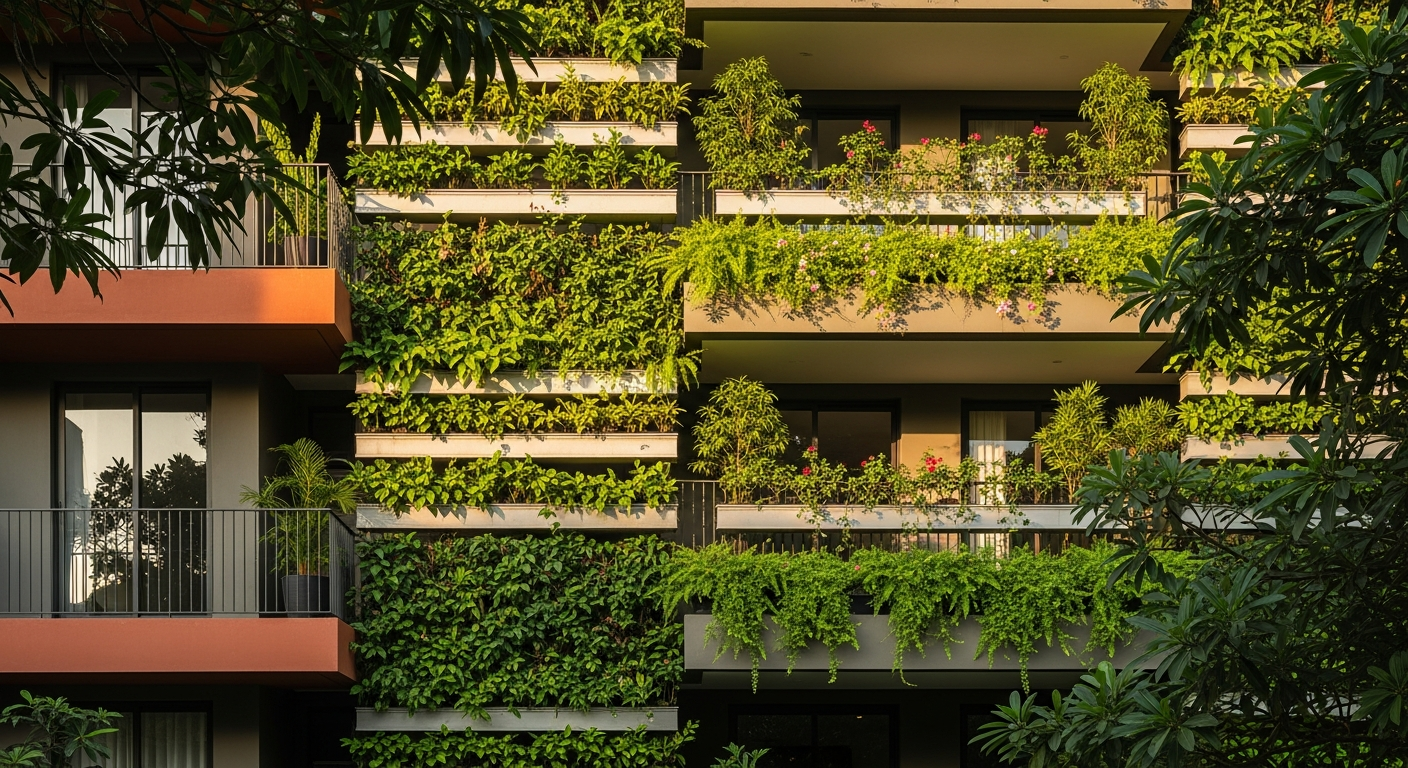
Vertical garden building design India installations are lowering exterior wall surface temperatures by as much as 30% compared to bare concrete facades exposed to direct afternoon sun. A Pune apartment complex that wrapped its west-facing wall in a living green system reported indoor cooling costs dropping noticeably the following summer. That single retrofit illustrates why architects across Indian cities are rethinking blank concrete walls as wasted opportunity.
At Zlendo, we’ve found that most homeowners still think of vertical gardens as decorative extras rather than functional building elements. Vertical garden building design India done properly is a thermal management strategy first and an aesthetic upgrade second — the greenery does real structural and environmental work.
Why Vertical Garden Building Design India Is Gaining Ground
Urban heat island effects have pushed city-center temperatures in Indian metros several degrees higher than surrounding rural areas, and blank concrete and glass facades are a major contributor to that gap.
The Cooling Mechanism Behind Living Walls
Plants cool surrounding air through evapotranspiration — releasing water vapor that absorbs heat — while their foliage also shades the wall surface directly, cutting the amount of solar radiation absorbed into the building mass.
Air Quality as a Secondary Benefit
Dense foliage walls filter particulate matter from urban air, offering a meaningful air quality improvement in high-pollution city corridors alongside the thermal benefits.
Idea One: Modular Living Wall Panels for Vertical Garden Building Design India
Pre-grown modular panels, installed like tiles onto a mounting frame, have become the most practical entry point for vertical greening in India’s climate.
Why Modular Beats Direct Planting
Modular systems allow individual panels to be swapped out if a section underperforms, avoiding the all-or-nothing risk of direct soil-based climbing plant systems that can take years to establish full coverage.
Cost Considerations
Modular panel systems typically cost more upfront per square meter than simple trellis-and-climber setups, but their faster establishment time and easier maintenance access often justify the premium for commercial buildings.
Zlendo’s Realty Impact Index™ tracks buyer interest data showing listings featuring documented green facade elements draw measurably higher inquiry rates than comparable listings without them.
Idea Two: Climbing Vine Trellis Systems
For budget-conscious projects, a simple trellis structure paired with fast-growing native climbers remains one of the most cost-effective vertical greening approaches available.
Choosing the Right Climbing Species
Native and regionally adapted climbers require significantly less irrigation and maintenance than imported ornamental species, an important consideration given water scarcity concerns in many Indian cities.
The Counterintuitive Insight About Fast Growth
Homeowners often want the fastest-growing climbers available, but excessively vigorous vines can damage mortar joints and window frames if not paired with proper support structures — slower, more disciplined growth is frequently the better long-term choice.
Idea Three: Balcony Integrated Green Screens
Rather than treating balconies as separate from the greening strategy, integrated screens turn private outdoor space into part of the building’s thermal envelope.
Privacy and Shade in One System
Balcony green screens simultaneously provide shade for the unit below, privacy from neighboring buildings, and a cooling buffer zone before heat reaches interior glass.
Structural Load Planning
Wet soil and mature plant mass add meaningful load to balcony structures, making early structural engineering input essential rather than an afterthought bolted on after construction.
How Zlendo’s 5D Visualization Protocol Models Green Facade Performance
Zlendo’s 5D Visualization Protocol simulates how a proposed green wall or facade system will perform across seasons, layering solar exposure data, irrigation planning, and long-term maintenance forecasting onto the building model.
Simulating Seasonal Coverage Changes
Deciduous or seasonal climbing species change coverage dramatically across the year, and visualization tools help buyers understand what a facade will actually look like in peak summer versus the dormant season, rather than relying on a single idealized rendering.
Comparing Water Demand Across Designs
Different vertical garden systems carry very different irrigation requirements, and cost modeling before construction helps homeowners choose a system that matches their maintenance budget and water access realistically.
Idea Four: Rooftop-to-Facade Cascading Gardens
Extending a rooftop garden downward as a cascading facade feature creates continuous green coverage rather than isolated pockets of planting.
Water Flow Design
Cascading systems can reuse rooftop rainwater harvesting output for irrigation, reducing the net water demand of the vertical greening system significantly compared to standalone drip irrigation.
The Second Counterintuitive Insight: More Plants Isn’t Always More Cooling
It seems logical that denser planting always means more cooling, but overly dense, poorly ventilated green walls can trap humidity against the building envelope, occasionally increasing moisture-related maintenance issues rather than purely delivering cooling benefit.
Idea Five: Hydroponic Vertical Systems for High-Rise Facades
Soil-free hydroponic vertical garden systems reduce structural load dramatically, making them viable for taller buildings where soil-based systems would be impractical.
Weight Advantages Over Soil-Based Systems
Hydroponic panels typically weigh a fraction of an equivalent soil-filled system, opening up green facade options for mid-rise and high-rise towers that couldn’t otherwise support traditional planting weight.
Maintenance and Automation
Automated nutrient dosing and irrigation scheduling reduce the ongoing labor burden of hydroponic systems, though they do require reliable electricity and occasional technical servicing that soil-based systems don’t.
Idea Six: Native Species Selection for Climate Resilience
The single biggest determinant of a vertical garden’s long-term success in India isn’t the mounting system — it’s whether the plant species actually suit the local climate.
Drought Tolerance Matters More Than Looks
Species selected purely for visual appeal often fail within a year or two if they can’t handle regional humidity swings, heat spikes, and irregular monsoon watering patterns.
Working With Regional Nurseries
Local nurseries familiar with a specific city’s microclimate typically recommend far more resilient species combinations than generic national plant lists.
Pairing Species for Year-Round Coverage
Mixing evergreen ground-cover species with seasonal flowering climbers keeps a facade looking full even when one species type is dormant, avoiding the patchy, half-bare appearance that single-species installations often develop after a year or two.
Maintenance Realities Most Homeowners Underestimate
A vertical garden isn’t a one-time installation — it’s an ongoing living system that needs a realistic maintenance plan from day one.
Budgeting for Seasonal Pruning and Replacement
Even resilient native species need periodic pruning, occasional replacement of underperforming panels, and seasonal fertilization, costs that homeowners frequently underestimate when comparing upfront installation quotes.
The Third Counterintuitive Insight: DIY Installation Often Costs More Long-Term
Homeowners attempting a DIY vertical garden to save on installation costs frequently end up spending more over three to five years replacing failed plantings and repairing irrigation leaks than they would have spent on a professionally installed and warrantied system from the start.
Thinking about adding a green facade to your next project? See how Zlendo’s Smart Cost Estimator models the true installation and maintenance costs of different vertical garden systems.
The Bigger Picture: Green Facades and Building Value
Beyond thermal comfort, documented green infrastructure is increasingly factored into sustainability assessments that influence both resale value and institutional interest in a property.
Connection to Green Building Certification
Vertical greening contributes toward several credit categories in green building rating frameworks, making it a meaningful lever for developers pursuing formal sustainability certification.
Global Context for Urban Greening
Research summarized by McKinsey on urban sustainability trends and background detailed in the Wikipedia overview of green walls both point to accelerating global adoption of vertical greening as cities confront rising urban temperatures.
Coverage from Forbes on sustainable architecture trends and data referenced by Statista on urban green infrastructure investment both suggest this category will keep expanding as climate-conscious design becomes a mainstream buyer expectation rather than a niche preference.
Ready to explore green facade options for your building? Zlendo’s design tools help you visualize and cost out vertical garden systems before committing. Start designing with Zlendo Realty today.
Frequently Asked Questions About Vertical Garden Building Design India
How much does vertical garden building design India typically cost per square meter?
Costs vary widely by system type, with simple trellis-and-climber setups costing far less than modular pre-grown panels or hydroponic high-rise systems, so budget should guide system choice early in planning.
Do vertical gardens damage building walls over time?
Properly designed systems with support structures and root barriers don’t damage walls, but direct, unsupported climbing growth against mortar joints can cause long-term damage if not managed.
How much water do vertical garden systems need?
Water demand depends heavily on species and system type, with native drought-tolerant species and rainwater-linked irrigation requiring significantly less water than imported ornamental species on standalone drip systems.
Can vertical gardens be installed on existing buildings, not just new construction?
Yes, modular panel and trellis systems can be retrofitted onto most existing facades, though a structural engineer should verify load capacity before installation, especially for taller buildings.
Do vertical gardens actually reduce indoor cooling costs?
Yes, shading and evapotranspiration from a well-designed green facade can measurably reduce the heat load reaching interior walls, translating into lower air conditioning demand during peak summer months.
What plant species work best for vertical gardens in Indian climates?
Native and regionally adapted species suited to local humidity, heat, and monsoon patterns generally outperform imported ornamental varieties in long-term survival and reduced maintenance needs.
Is hydroponic vertical gardening suitable for high-rise buildings?
Yes, hydroponic systems are lighter than soil-based alternatives, making them a practical option for mid-rise and high-rise facades where structural load limits would rule out traditional planting.
Do green facades help with green building certification?
Yes, vertical greening typically contributes credits toward several categories in green building rating frameworks, supporting broader sustainability certification goals for a project.
How long does it take for a vertical garden to reach full coverage?
Modular pre-grown panels can achieve full coverage almost immediately upon installation, while trellis-and-climber systems may take one to three growing seasons to fully establish, depending on species and climate.
Do vertical gardens increase a property’s resale value?
Data tracked through Zlendo’s Realty Impact Index™ shows listings with documented green facade features draw measurably higher buyer inquiry rates, suggesting a positive influence on perceived property value.