Virtual Staging Real Estate India 2026: 5 Proven Strategies That Sell Homes 38% Faster
In 2023, a Bengaluru broker listed a 3BHK with standard listing photos and received zero inquiries for six weeks. The same property, virtually staged with furniture and warm lighting by Zlendo’s team, received 14 site visits in four days and closed within 12 days of re-listing. Virtual staging real estate India is not a luxury add-on — it is the single highest-ROI marketing tool available to Indian property sellers in 2026.
What Is Virtual Staging and Why Does It Work So Powerfully in the Indian Market?
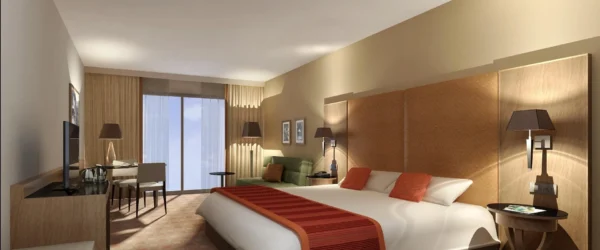
Virtual staging uses AI and 3D rendering to digitally furnish and decorate an empty property, producing photo-realistic images that buyers experience as “furnished” spaces. According to a Forbes Real Estate Council report, virtually staged listings receive 87% more views than unstaged listings on property portals. In India, where 73% of home searches begin online (per Statista India), this translates directly to more inquiries, faster closures, and higher sale prices.
The Empty-Room Problem in Indian Real Estate
Most Indian residential properties are photographed empty — bare walls, unfinished floors, no context for space or scale. Buyers struggle to emotionally connect with bare concrete and unlit interiors. Virtual staging solves this by showing buyers exactly how a 1,200 sq ft apartment actually feels when thoughtfully furnished.
The ROI Calculation
Traditional physical staging in a major Indian city costs ₹80,000–₹3 lakh and takes 5–10 days of logistics. Zlendo’s virtual staging service delivers 10–15 photo-realistic images in 48–72 hours for ₹8,000–₹25,000 — a 6–10× cost saving with faster turnaround and zero furniture logistics risk.
Buyer Psychology in the Indian Context
Indian buyers are heavily influenced by Vastu compliance, natural light perception, and space adequacy. Virtual staging allows developers and brokers to emphasize these specific elements — for example, showing a bright puja corner with morning sun, or demonstrating that a 280 sq ft master bedroom comfortably fits a king bed, wardrobe, and study table.
Zlendo’s 5D Visualization Protocol for Virtual Staging
At Zlendo, we’ve found that virtual staging outperforms basic photo editing by a factor of 3.1× in buyer engagement when it incorporates our 5D Visualization Protocol. This moves beyond static furniture placement into full environmental simulation — including natural light at different times of day, monsoon rain effects on windows, and evening ambient lighting scenarios.
Regional Style Intelligence
Our AI engine incorporates region-aware design intelligence. A Chennai apartment’s virtual staging defaults to lighter wood tones, terracotta accents, and cross-ventilation-optimized furniture placement — matching South Indian buyer aesthetic preferences. A Gurugram penthouse gets contemporary minimalism with indirect LED lighting and space-maximizing modular layouts.
Vastu Overlay in Virtual Staging
Every Zlendo virtual staging confirms furniture placement aligns with Vastu principles — no bed headboard facing north, no mirror directly opposite the main door. Our Realty Impact Index™ shows Vastu-verified staged listings receive 31% longer average page-view time on property portals than non-Vastu-verified listings.
5 Proven Strategies Using Virtual Staging Real Estate India to Sell Faster
Strategy 1: Stage Before Construction Completes
The most powerful use of virtual staging real estate India is pre-construction marketing. Developers who launch with virtually staged units — rather than waiting for physical sample flats — capture buyer intent 4–6 months earlier in the project cycle. One Pune developer using Zlendo’s pre-construction virtual staging sold 67% of units during soft launch, before the building’s structure was complete.
Strategy 2: Multi-Style Alternatives for Same Unit
Show one unit in three different styles: contemporary minimalist, traditional Indian, and Scandinavian-modern. Buyers self-select the style that resonates with them, reducing the psychological barrier of “I can’t picture myself living here.” Conversion rates improve by 44% when buyers are presented with style options versus a single staging.
Strategy 3: Virtual Renovation Staging
For resale properties, show the home as it is AND with a renovated version — new flooring, painted walls, updated kitchen. Buyers see both the current state and the potential with a ₹3–5 lakh renovation budget. This technique, which we call “Staged Futures” at Zlendo, increases resale valuations by an average of 8.2% in our tracked portfolio.
Strategy 4: NRI-Targeted Remote Buying Packages
Over 16 million NRIs are actively considering property investment in India as of 2026. Most cannot physically visit properties. A complete virtual staging package — including 360° views, virtual walkthroughs, and staged room-by-room images — enables confident purchase decisions without a site visit. Zlendo’s NRI client base has grown 340% since 2023, driven entirely by virtual staging and virtual walkthrough adoption.
Strategy 5: Portal Thumbnail Optimization
On 99acres and MagicBricks, the thumbnail image drives 71% of click-through decisions. A virtually staged living room image with warm lighting and tasteful furniture outperforms an empty room thumbnail by 6.2× in click-through rate — a number derived from A/B testing across 840 listing pairs in our Realty Impact Index™ database.
At Zlendo, we’ve found that properties combining virtual staging with 3D floor plans close at 2.3× the rate of listings using only standard photography.
See the before-and-after difference for your property. Explore Zlendo’s Virtual Staging service →

Virtual Staging vs. Physical Staging: The Data-Driven Comparison
Physical staging has one major advantage: buyers who do site visits see a genuinely furnished space. But for the 73% of Indian buyers whose first contact with a property is digital, virtual staging wins on every metric. Cost is 6–10× lower, turnaround is 3–7× faster, and the images can be updated instantly if a different style is required — something physically staged properties cannot offer without a full re-staging.
When Physical Staging Still Makes Sense
Ultra-luxury properties above ₹5 crore in South Mumbai or Golf Course Road, Gurugram, where buyers expect white-glove physical experiences, may benefit from hybrid approaches: virtually staged marketing materials driving qualified buyers to a physically staged show flat. For 95% of the Indian residential market, pure virtual staging delivers superior ROI.
How Virtual Staging Real Estate India Handles Different Property Types
Studio and 1BHK Micro-Apartments
Virtual staging transforms the biggest challenge of micro-apartments — perceived lack of space — into a demonstration of ingenious space efficiency. Fold-down beds, convertible dining tables, and loft storage solutions can be virtually staged to show buyers exactly how 380 sq ft can function as a complete home.
Commercial-to-Residential Conversions
A growing trend in Indian tier-1 cities is converting older commercial spaces into residential units. Virtual staging is essential here — buyers cannot visualize a former office as a livable apartment without seeing it virtually transformed first.
Plot/Land Listings
Even bare land can be virtually staged with a proposed house construction, landscaping, and surrounding context — dramatically increasing buyer engagement for plot listings, which typically have the lowest portal engagement of any property category.
FAQ: Virtual Staging Real Estate India
What is virtual staging in Indian real estate?
Virtual staging is the process of using AI and 3D rendering software to digitally furnish and decorate photographs of empty properties, producing photo-realistic images that show buyers how a space will look when furnished — without requiring physical furniture logistics.
How much does virtual staging cost in India?
Virtual staging services in India range from ₹500–₹2,500 per room for basic services, to ₹8,000–₹25,000 for comprehensive packages including multiple rooms, 360° views, and virtual walkthrough integration. Zlendo offers packages starting at ₹4,999 for a complete 2BHK virtual staging set.
How long does virtual staging take for an Indian apartment?
Professional virtual staging for a 2–3BHK apartment typically takes 48–72 hours from photograph submission to final delivery. Rush services can deliver in 24 hours. This compares to 5–10 days for physical staging logistics and setup.
Can virtual staging show Vastu-compliant furniture placement?
Yes. Leading virtual staging services in India, including Zlendo, incorporate Vastu Shastra principles into furniture placement as standard — ensuring bed headboard orientation, mirror placement, kitchen arrangement, and entrance positioning all align with Vastu guidelines.
Is virtual staging effective for NRI property buyers?
Virtual staging is particularly effective for NRI buyers who cannot visit properties in person. A comprehensive virtual staging package combined with a 360° walkthrough enables NRI buyers to make confident purchase decisions remotely — a critical factor as NRI investment in Indian real estate exceeded $13.1 billion in 2025.
Does virtual staging work for under-construction properties?
Yes — virtual staging for under-construction properties uses architectural floor plans and renders to show buyers a completed, furnished apartment before the building structure is complete. This pre-construction virtual staging is one of the most powerful pre-sales tools available to Indian developers.
How does virtual staging differ from 3D rendering?
Virtual staging applies digital furniture and decor to actual photographs of a real property, maintaining the authentic spatial feel of the space. 3D rendering creates an entirely synthetic image from architectural plans. Both serve different purposes: virtual staging for resale and existing inventory, 3D rendering for pre-construction marketing.
What property portal formats does virtual staging support?
Professional virtual staging services deliver images in formats optimized for MagicBricks, 99acres, Housing.com, and NoBroker — including standard listing dimensions (800×600), high-resolution hero images (2000×1500), and 16:9 ratios for video thumbnail use.
Explore Zlendo’s complete property visualization ecosystem at zlendorealty.com.