AI Property Price Prediction Tools India: 5 Ways They Beat Guesswork
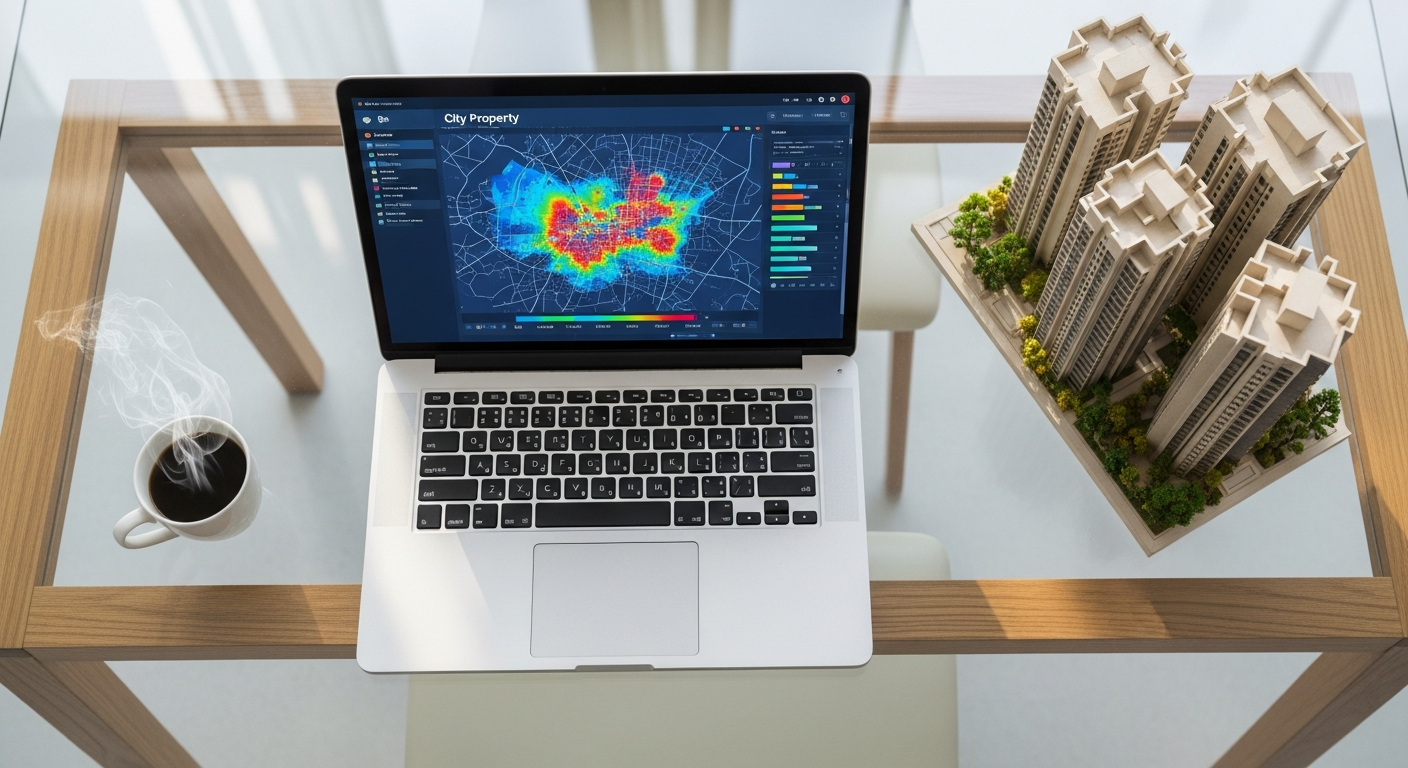
AI property price prediction tools India platforms now process transaction histories, satellite imagery, and infrastructure data to estimate a flat’s value in under three seconds — a task that once took a human appraiser two to three days of fieldwork. A Bengaluru buyer recently used one such tool to discover a seller’s asking price sat 14% above the model’s fair-value estimate, and negotiated the difference down before signing. That single interaction shows exactly why this technology is spreading so fast.
At Zlendo, we’ve found that most buyers still rely entirely on broker opinion and word-of-mouth comparables when pricing a property — a method prone to bias, outdated data, and simple guesswork. AI property price prediction tools India platforms replace that guesswork with pattern recognition across far more variables than any single human can track.
How AI Property Price Prediction Tools India Actually Work
These systems ingest registered transaction records, builder pricing, rental yields, connectivity data, and even satellite-derived construction progress to build a valuation model for a specific micro-market, then adjust for a subject property’s specific features.
The Data Sources Behind the Model
Government registration data, RERA project filings, utility connection records, and crowd-sourced listing data are typically blended into a single training dataset that gets refreshed weekly or even daily in high-transaction cities.
Why Speed Matters More Than People Realize
A traditional appraisal can take several days to schedule and complete, during which market conditions in a fast-moving micro-market can shift, leaving a stale price anchor by the time negotiations happen.
Reason One: AI Property Price Prediction Tools India Remove Emotional Bias
Human appraisers and agents, however well-intentioned, are influenced by relationship dynamics, commission incentives, and recency bias from their last few deals.
The Commission Incentive Problem
An agent earning a percentage-based commission has a structural incentive to lean toward higher valuations, a bias that purely data-driven models don’t carry.
Consistency Across Thousands of Properties
A model applies the same weighting logic to every property it evaluates, producing consistent, explainable results rather than the property-by-property variability common in manual appraisal.
Zlendo’s Realty Impact Index™ found that properties priced using AI-assisted valuation models sold within a narrower time-to-close window than comparably listed properties priced by agent judgment alone.
Reason Two: They Catch Micro-Market Shifts Faster
Prices in adjacent neighborhoods can diverge sharply based on a single new metro station or IT park announcement, and traditional comparables often lag these shifts by months.
Infrastructure-Aware Pricing
Advanced models incorporate planned infrastructure timelines, adjusting valuations upward in anticipation of connectivity improvements well before human agents update their mental comparables.
The First Counterintuitive Insight: More Data Doesn’t Always Mean Better Accuracy
It seems obvious that feeding a model more variables should improve accuracy, but overloading a valuation model with noisy or irrelevant features — like unrelated regional GDP figures — can actually degrade prediction quality by introducing statistical noise the model mistakes for signal.
How Zlendo’s 5D Visualization Protocol Complements Price Prediction
Price alone doesn’t tell a buyer whether a floor plan is space-efficient or whether a layout will hold value over time. Zlendo’s 5D Visualization Protocol pairs spatial design analysis, daylight simulation, and space-efficiency scoring with market pricing data.
Connecting Design Quality to Valuation
Two identically priced flats in the same building can carry very different long-term value depending on layout efficiency — a factor traditional price-per-square-foot models frequently ignore entirely.
Bridging Valuation and Design Decisions
Buyers using combined price-prediction and space-visualization tools report more confidence in negotiation, since they can point to specific layout inefficiencies alongside market data when discussing price.
Reason Three: AI Models Reduce Information Asymmetry
Sellers and their agents historically held more pricing information than buyers, particularly in less transparent secondary markets.
Leveling the Negotiation Field
When a buyer walks into a negotiation with an independent, data-backed valuation estimate, the conversation shifts from trust-based persuasion to evidence-based discussion.
Transparency for First-Time Buyers
First-time buyers, who historically had the least market knowledge, benefit disproportionately from tools that instantly contextualize whether an asking price is reasonable for the specific micro-market.
Reason Four: They Quantify Risk, Not Just Price
The best AI property price prediction tools India platforms don’t just output a number — they attach a confidence interval and flag anomalies.
Confidence Intervals Change Decision-Making
A valuation presented as a range rather than a single figure helps buyers understand how much negotiating room genuinely exists versus how much is likely non-negotiable market reality.
The Second Counterintuitive Insight: Higher Confidence Isn’t Always Good News
A tight, high-confidence valuation range can actually signal a highly liquid, competitive market with less room to negotiate, while a wider range may indicate an inefficient market where a sharp buyer has more leverage to extract value.
Curious what your target property is actually worth? Explore how Zlendo’s Smart Cost Estimator pairs construction and renovation cost data with market pricing insight.
Reason Five: They Scale Where Human Appraisers Can’t
India adds new residential inventory across hundreds of cities every year, far outpacing the capacity of certified human appraisers to individually assess every unit.
Tier-2 and Tier-3 City Coverage
Smaller cities that historically had almost no reliable comparable-sales data now get modeled valuations by extrapolating patterns learned in better-documented tier-1 markets, adjusted for local factors.
Continuous Repricing Versus Annual Reassessment
Where traditional appraisals happen once at transaction time, AI models can continuously reprice a portfolio, which is valuable for investors tracking multiple properties across cities.
Where These Tools Still Fall Short
AI property price prediction tools India platforms struggle with unique properties, heritage structures, and hyper-local factors like a specific building’s management quality that don’t show up cleanly in transaction data.
The Limits of Pattern Matching
A model trained on standard apartment transactions will often mis-price an unusual property, like a converted heritage bungalow, because there simply aren’t enough comparable transactions to learn from.
Human Judgment Still Matters for Edge Cases
Experienced local agents still add value for negotiation strategy, legal due diligence nuance, and reading non-quantifiable signals like a seller’s urgency — areas where models remain weak.
According to reporting from Forbes and data referenced by Statista, global adoption of AI-based property valuation (AVM) technology has grown steadily as lenders increasingly incorporate automated valuations into mortgage underwriting.
How Lenders and Banks Are Adopting AI Valuation
Automated Valuation Models, explained in detail on Wikipedia’s overview of automated valuation models, are increasingly used by Indian banks as a first-pass check before dispatching a human appraiser, speeding up loan approval timelines.
Faster Loan Approvals
Banks using AI-assisted first-pass valuations report meaningfully faster average loan processing times compared to fully manual appraisal workflows, according to industry commentary tracked by McKinsey on digital lending transformation.
Reducing Appraisal Fraud Risk
Independent, algorithm-driven valuations also reduce the risk of inflated appraisals that have historically contributed to lending risk in less regulated markets.
What Investors Should Watch Before Trusting a Model
Not every AI property price prediction tools India platform is built on equally robust data, and investors relying on these outputs for major decisions should understand the underlying methodology.
Checking a Platform’s Data Freshness
A model trained on transaction data that is a year or more old will systematically lag a fast-appreciating micro-market, so it’s worth asking any platform how recently its underlying dataset was refreshed before trusting a valuation for a live negotiation.
Cross-Referencing Multiple Models
Running the same property through two or three independent valuation tools and comparing the spread between estimates is a simple way to gauge how much confidence to place in any single number, especially for high-value transactions.
The Third Counterintuitive Insight: Free Tools Aren’t Always Less Accurate
It’s easy to assume that paid, enterprise-grade valuation platforms automatically outperform free consumer-facing tools, but several free tools built on aggregated public registration data have matched or beaten proprietary paid models in tier-1 city accuracy benchmarks, since data coverage — not price — is usually the deciding factor.
Want to see how a property’s true value compares to design quality and construction cost? Zlendo brings pricing, floor plan, and cost data together in one place. Explore Zlendo Realty today.
Frequently Asked Questions About AI Property Price Prediction Tools India
How accurate are AI property price prediction tools India platforms?
Accuracy varies by market liquidity and data density, with well-documented tier-1 city apartments typically seeing tighter valuation ranges than unique or rural properties with limited comparable data.
Can AI valuation tools replace a bank’s official appraisal?
Not entirely. Most lenders use AI valuation as a fast first-pass screen, still dispatching a certified human appraiser for final loan approval on higher-value transactions.
Do AI property price prediction tools India platforms work for tier-2 and tier-3 cities?
Increasingly yes, though accuracy is generally lower than in data-rich tier-1 markets since these tools rely on extrapolated patterns where local transaction data is sparse.
What data do these AI valuation models use?
Most models combine registered transaction records, RERA project filings, rental yield data, infrastructure timelines, and sometimes satellite-derived construction progress imagery.
Are AI property valuations biased toward sellers or buyers?
Well-designed models aim for neutrality since they’re trained on actual transaction data rather than commission incentives, though data quality and coverage gaps can still introduce unintentional bias.
How do confidence intervals in AI valuations help buyers?
A confidence range shows how much genuine uncertainty exists in a valuation, helping buyers judge how much negotiating room realistically exists versus how firm the market price likely is.
Can these tools value unique or heritage properties accurately?
Generally no, since models rely on comparable transaction data, and unique properties with few comparables tend to produce less reliable automated valuations than standard apartment units.
Do Indian banks use AI valuation for home loan approvals?
Yes, a growing number of lenders use AI-assisted valuation as an initial screening step to speed up loan processing before a final human appraisal is scheduled.
How often do AI property valuation models update their estimates?
High-transaction urban markets often see weekly or even daily model refreshes, while lower-transaction areas may update less frequently due to limited new data.
Should I trust an AI valuation over my real estate agent’s opinion?
Use both together — AI valuation offers a data-driven anchor point, while an experienced agent adds negotiation strategy and local nuance that models still struggle to quantify.